
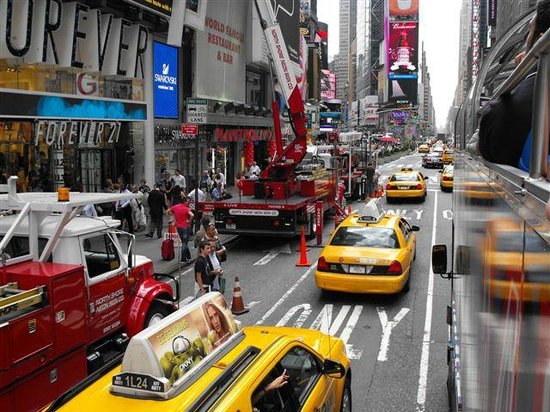
I had never gotten the chance to ride on a subway until I got the chance to visit New York City in December of 2016. The biggest thing that I remember from that experience was how close people stood or sat next to me and also they way they spoke. There would be a whole open subway car, but somehow someone would take the seat next to me or even stand next to me. They wouldn’t really acknowledge I was there or talk to me, but when they did talk, the way they spoke was so different to me. This extended into walking on the sidewalks around the city, always getting bumped into or hearing people yelling. There were always people around me walking or just standing there.
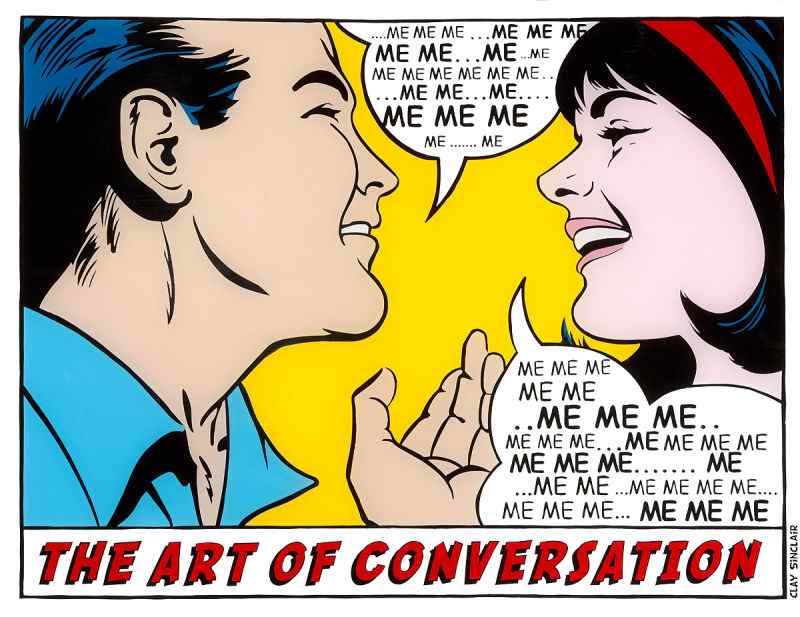
I kept thinking to myself, what good reason would this person have to stand so close to me? Why are they raising their voice at me or using words I’ve never heard before? I will be examining this idea of “personal space” in public and how this impacts conversation using the symbolic interaction theory in this research report. The symbolic interaction theory focuses on the roles people play in their lives and how they interact with other individuals to uphold these various roles (Cohen 20-21). My argument threefold; the proximity of people to one another when standing can be an indicator of relationships present between each person or each person and their environment, this is a biologically driven process, and the proximity of people directly impacts the ability to maintain conversation.
The proximity of people to one another when standing, with or without conversation, can be an indicator of relationships. While this can naturally be inferred between people, this also extends into the secondary thought of relationship present between each person and their environment. Relationships are built through contact and communication. For example, in Solidarity Between Parents and Their Adult Children in Europe, the topic of contact between parents and adult children is studied closely in qualitative and quantitative ways. The researchers, noted the social importance of geographical proximity and contact frequency when they wrote, “Like geographical proximity, regular contact is needed to exchange support. Contact frequency is sometimes seen as a form of support in itself as it meets a social need (Fokkema, 19).” As contact frequency is critical to maintaining relationships, it is accomplished by conversation and communication. The researchers saw the importance of this and prepared a quantitative study across multiple countries. They gathered data using sample surveys for people over 50 years of age asking them to quantify how much contact they have with their adult children who no longer live at home, and the answers ranged from contact every day to less than once a week. The countries with the largest numbers of contact every day was Greece and Italy, both with 70% of the survey population (Fokkema, 20). The country with the lowest percentage of contact every day was Switzerland with 30% of the survey population (Fokkema, 20). This data could be explained by cultural differences dependent on the concept of family. Cohen describes the family as, “the people to whom we feel related and who we expect to define us as members of their family as well” (Cohen 6). As we previously discussed a family can be as inclusive or exclusive as the individual wants. Individuals are able to choose if others outside the biological family are part of their family, as well as choosing who their friends are and how much time they spend with them. In the Psychology of Love 101, Karin Sternberg discusses what love is and how people fall in love. A cornerstone concept in the books is physical proximity as Sternberg says, “Physical proximity does exert a significant influence on whom we end up liking, and maybe even loving (Sternberg, 93).” This can explain how really good friends end up liking each other, which is a very common way people end up dating. This can be applied to conversation as well because if the speaker is attracted to the listener, they will try to take on a powerful stance like to stand closer or maintain more eye contact. Therefore, the relationships present directly impact conversation being held.

Biologically, our senses allow us to interact with others and our environment. One of the most important senses is sight. Humans use sight frequently, especially during conversation, but there are unspoken social norms that police conversational behaviors. These behaviors can be directly related to the important component of sight and posture. A study was conducted on how the calf muscles and vision impact posture. While standing on monitored platforms, the subjects with different levels of calf fatigue were asked to stand in different levels of vision ranging from none to four meters. The researchers results, “confirmed a decreased postural control consecutive to calf muscles fatigue during quiet bipedal standing in the absence of vision. More interestingly, results also evidenced that the ability to use visual information to compensate for this destabilising effect is dependent on the eye–visual target distance (Vuillerme, 172).” This research provided the link to how eyesight can be used to supplement poor posture when it is possible. The biological advancement of enhanced vision in humans is partly why we are able to successfully communicate, for example the ability to read lips when a voice cannot be heard. While eyesight is very important, posture is the most important. In a different study of the importance of posture there was an evaluation of working conditions in Sri Lanka specifically in standing sewing machine operators. This specific demographic was chosen to be studied because they are “engaged in highly repetitive operations, and work while standing during their entire working hours. This leads to discomfort and musculoskeletal disorders (Sakthi, 70).” The researchers collected data by sample surveys of workers which listed pain areas and ranking pain. The areas with the most impact were the foot, lower leg, knee, thigh, and lower back. These injuries are common for long hours of standing and repetitive action of upper limbs and poor posture. The human body is built to maintain certain posture, when this is not maintained during conversation or work, it can lead to long term health problems and or breaking social norms. For individuals who are aphasic, while conversation may be impaired biologically, communication is not. Researchers examined how this affects conversation in the public sphere. In Conversation : Cognitive, Communicative and Social Perspectives, researchers say they, “have noted that aphasic individuals who exhibit a range of difficulties as scored on such tests, often display relatively effective communication skills (Givón, 2).” Why might this be? The use of sight to read signs or the use of pictures to identify a need are just two examples. While conversation is impaired in aphasic individuals, communication is not, and as humans we are biologically equipped to communicate even when a sense is deprived.
While there is no exact measurement for what “personal space”, but it is a social norm to leave a certain amount of space between the speaker and the listener, as well as certain behaviors within the environment the people are in during conversation. So what conversations can arise in public? Anything, but for the intents and purposes of this research report the focus will be on the exchange of knowledge and storytelling. The exchange of knowledge is key to being able to navigate our environment and act within social bounds. Knowledge is complex. In The Morality of Knowledge in Conversation, the authors describe knowledge as, “dynamic, graded and multidimensional (Steensig, 3).” The ever changing nature of knowledge is due to learning from others during conversation. After acquiring this knowledge it can be, “deployed and reliance on epistemic resources are normally organized (Steensig, 3).” So after the knowledge is acquired, it is organized in thoughts, and when the knowledge is needed again it can be remembered and applied. For example, an individual running into someone in the street while being lost might learn their target location from the person they ran into. Storytelling is the second component. In Analyzing Narrative : Discourse and Sociolinguistic Perspectives, the authors discuss two important concepts of storytelling: local occasioning and sequential implicitness. The authors describe both when they say, “The concept of local occasioning captures the fact that narratives do not come out of the blue but, rather, emerge in relation to what is being talked about in a particular interaction and are thus made relevant to the local context. The idea of sequential implicitness accounts for the fact that once a story is told, it will affect the way subsequent talk develops (De Fina, 87).” Using the information given by these authors, let’s reexamine the previous example of an individual running into someone in the street while being lost. Say this individual goes to the target location to meet friends, and the friends ask where this individual has been. This is when the storytelling begins. This not only answers the question, but is the segway into more conversation. During storytelling, it is common to see someone identify themselves, whether by an outright statement, for example saying someone is a mother, or by word choice in conversation, for example the use of pronouns for identification. In Conversation and Gender, the authors noted that, “speakers locate themselves as gendered and as members of other social categories (Speer, 64).” This is now changing due to the use of non-gendered pronouns like they/them, but the main point is that people do like to identify themselves in some way during conversation. The identification of individuals during conversation allows for the organization of conversation. This was studied in Sequence Organization in Interaction: Volume 1 : A Primer in Conversation Analysis, where they analyzed conversation specifically word choice and sentence structures as well as observation of the speaker/listener interaction. The researchers found that, “Among the most pervasively relevant features in the organization of talk-and-other-conduct-in-interaction is the relationship of adjacency or ‘nextness’ (Schegloff, 14).” This is a double entendre. The relationship of adjacency can refer to the speaker/listener closeness, and “nextness” can refer to the proximity of words in a sentence. To overcome the speaker/listener closeness, modern technology has bridged the gap. In Closer Together : This Is the Future of Cities, the author discusses the modernization and overall closeness of cities. The author discusses his kids and how he communicates with them when he says, “Every other week my children go to stay with their mother who lives a couple of streets away. I sometimes talk to them via video Skype. It works fine, but does not satisfy our need to see each other. When we speak we want to meet (Ståhle, 151).” The technology allows those far away to communicate and even hear the voices of loved one, but it can never fill the need for a real face to face conversation.

The idea of “personal space” in public and how this impacts conversation can be explained using the symbolic interaction theory. During conversation roles are taken on by both the speaker and listener. These roles are reinforced by the interactions between each individual. The proximity of people to one another when standing indicates the relationships present between each person or each person and their environment proven by the concept of constant frequency and the idea of family. Conversation and standing proximity is a biologically driven process because of the influence of sight and posture on conversation. The proximity of people directly impacts the ability to maintain conversation due to knowledge, local occasioning and sequential implicitness.
Discussion Questions:
- What do you think about the concept of personal space?
- Think about the last face to face conversation you’ve had, do you think a lot about your choice of words? Do you “talk with your hands”?
- What other types of social interactions would personal space impact?
Sources:
- Cohen, Philip, N (2014) The Family: Diversity, Inequality, and Social Change. W.W. Norton & Company, Inc.
- De Fina, A., & Georgakopoulou, A. (2012). Analyzing Narrative : Discourse and Sociolinguistic Perspectives. Cambridge: Cambridge University Press.
- Fokkema, T., Dykstra, P. A., Bekke, S. ter, & Nederlands Interdisciplinair Demografisch Instituut. (2008). Solidarity Between Parents and Their Adult Children in Europe. Amsterdam: KNAW Press.
- Givón, T. (1997). Conversation : Cognitive, Communicative and Social Perspectives. Amsterdam: John Benjamins Publishing Company.
- Sakthi Nagaraj, T., Jeyapaul, R., & Mathiyazhagan, K. (2019). Evaluation of ergonomic working conditions among standing sewing machine operators in Sri Lanka. International Journal of Industrial Ergonomics, 70, 70–83.
- Schegloff, E. A. (2007). Sequence Organization in Interaction: Volume 1 : A Primer in Conversation Analysis. Cambridge, UK: Cambridge University Press.
- Ståhle, A. (2016). Closer Together : This Is the Future of Cities. Årsta: Dokument Press.
- Steensig, J., Mondada, L., & Stivers, T. (2011). The Morality of Knowledge in Conversation. Cambridge: Cambridge University Press.
- Sternberg, K. (2014). Psychology of Love 101. New York, NY: Springer Publishing Company.
- Speer, S. A., & Stokoe, E. (2011). Conversation and Gender. Cambridge, UK: Cambridge University Press.
- Vuillerme, N., Burdet, C., Isableu, B., & Demetz, S. (2008). The magnitude of the effect of calf muscles fatigue on postural control during bipedal quiet standing with vision depends on the eye-visual target distance.



 Jenna's Blog